Aromawave Editorial • Waterless Diffuser Guide • Australia
A lot of Australians already own a humidifier. Some have tried adding fragrance oil to it. The result is usually disappointing: a faint, watery smell that fades quickly and never fills the room. If that sounds familiar, the reason is simple: a humidifier and a waterless scent diffuser are designed to do completely different things.
Full waterless scent diffuser guide at waterless scent diffuser Australia. How it works: how a cold air diffuser works. Shop at Aromawave. ABN 70 681 300 363.
What does a humidifier actually do?
A humidifier has one job: it adds moisture to the air. It heats or vibrates water into fine water vapour and releases that vapour into the room. The result is increased humidity: the percentage of water in the air goes up. This is useful in dry climates, in air-conditioned offices, or in rooms where dry air causes discomfort.
Some humidifiers have an oil tray or oil pad where you can add a few drops of fragrance oil. The idea is that the moisture carries the scent into the air. In practice, this works poorly. Water dilutes the oil, heat alters its character, and the fragrance output is a fraction of what a dedicated diffuser produces. You end up with a faint, inconsistent smell rather than a proper fragrance atmosphere.
The other issue is humidity itself. Adding moisture to the air is not always what you want. In coastal and subtropical Australian cities like Sydney, Brisbane, and Perth, where summer humidity is already high, running a humidifier can make a room feel heavier and damper. Mould risk increases. Electronics near the unit can be affected. And the fragrance output, already weak, gets even harder to notice in humid air.
The core problem: A humidifier is built to move water. Adding fragrance to it is an afterthought, not a design feature. The result reflects that. You get moisture with a hint of scent, not a genuine fragrance experience.
What does a waterless scent diffuser actually do?
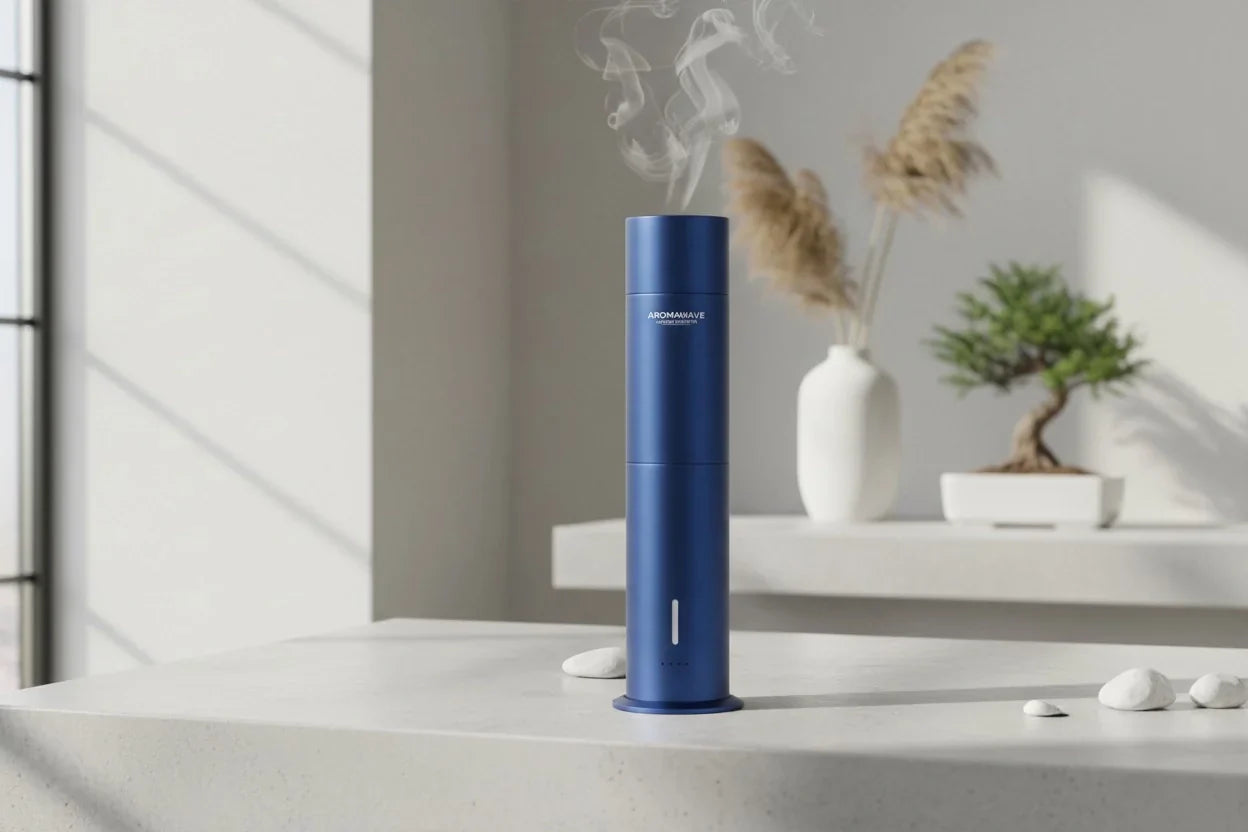
A waterless cold air scent diffuser has one job: it moves pure fragrance oil into the air without using water or heat. A small air pump inside the unit generates a stream of pressurised air, which passes through the fragrance oil reservoir and breaks the oil into an ultra-fine dry mist. That mist disperses through the room as pure, undiluted oil particles. No water is involved at any point. No humidity is added to the room. For more on this, the guide to whether a cold air diffuser leaves residue covers it in detail. The fragrance character of the oil is unchanged because no heat is applied.
This is the technology used in five-star hotel lobbies, premium retail environments, and luxury spas across Australia. To see exactly how it compares to other device types, the cold air diffuser vs ultrasonic guide covers this in full. The reason those spaces have such a distinctive, room-filling fragrance is precisely because they use cold air diffusion: not candles, not reed diffusers, and not humidifiers with oil added. For a complete technical breakdown of the technology, read the guide to cold air diffusion technology in Australia or the complete cold air scent diffuser 101 guide.
The practical result is a fragrance that fills the room consistently, maintains its character throughout the session, and does not add moisture to the air. In a 60 to 80 square metre open-plan Australian home, one Aromawave cold air scent diffuser handles the entire space. For a full breakdown of coverage by room size, read the guide to how many square metres a cold air diffuser covers. A humidifier with oil added would not reach the far end of the room at all.
Head-to-head: waterless scent diffuser vs humidifier
The two devices look similar from a distance: both sit on a shelf, both run quietly, both involve a reservoir of liquid. But their outputs are entirely different. Here is a direct comparison across the factors that matter for Australian homes.
Waterless Cold Air Diffuser (Aromawave)
Humidifier (with oil tray)
Why humidifiers fail at fragrance in Australian homes
Australia is not a uniformly dry country. The guide to cold air diffusers in Australian homes covers how different states and climates affect this decision. Parts of inland Australia and elevated areas do get dry air: particularly in winter: and a humidifier genuinely helps in those environments. But most of the Australian population lives in coastal cities where summer humidity is already significant. Sydney, Brisbane, Melbourne, and Perth all have seasonal periods where the last thing a home needs is more moisture in the air.
Beyond the humidity issue, there are four specific reasons why humidifiers do not work as fragrance devices in Australian conditions.
A humidifier's oil tray sits near or in the water reservoir. The oil mixes with water before dispersal. By the time it reaches the air, the fragrance concentration is a fraction of what the oil produces undiluted. What you smell in the room is a very faint version of the actual fragrance character.
Many humidifiers use heat to produce steam. Heat alters the chemical compounds in fragrance oil, changing how the scent presents in the air. The sharp citrus note becomes flat, the soft musk becomes harsher. What you designed your home to smell like is not what actually disperses into the room.
A humidifier used for fragrance covers roughly 10 to 20 square metres under ideal conditions. Modern Australian homes are built around open-plan layouts of 60 to 80 square metres. The fragrance from a humidifier does not reach the far end of an open-plan living area, let alone travel through to the entrance hall.
Adding fragrance oil to a water-based humidifier can damage the internal components and create conditions for bacterial or mould growth in the water reservoir. Most humidifier manufacturers specifically advise against adding oils for this reason. A waterless scent diffuser has no water tank: no mould risk at all.
When do you actually need a humidifier vs a waterless scent diffuser?
These two devices serve different needs. The question is not which one is better: it is which one solves your actual problem. Here is how to think about it.
The right tool for dry air problems
The right tool for fragrance atmosphere
Two devices for two different jobs
For those already satisfied with current setup
Can you run a waterless scent diffuser and humidifier in the same room?
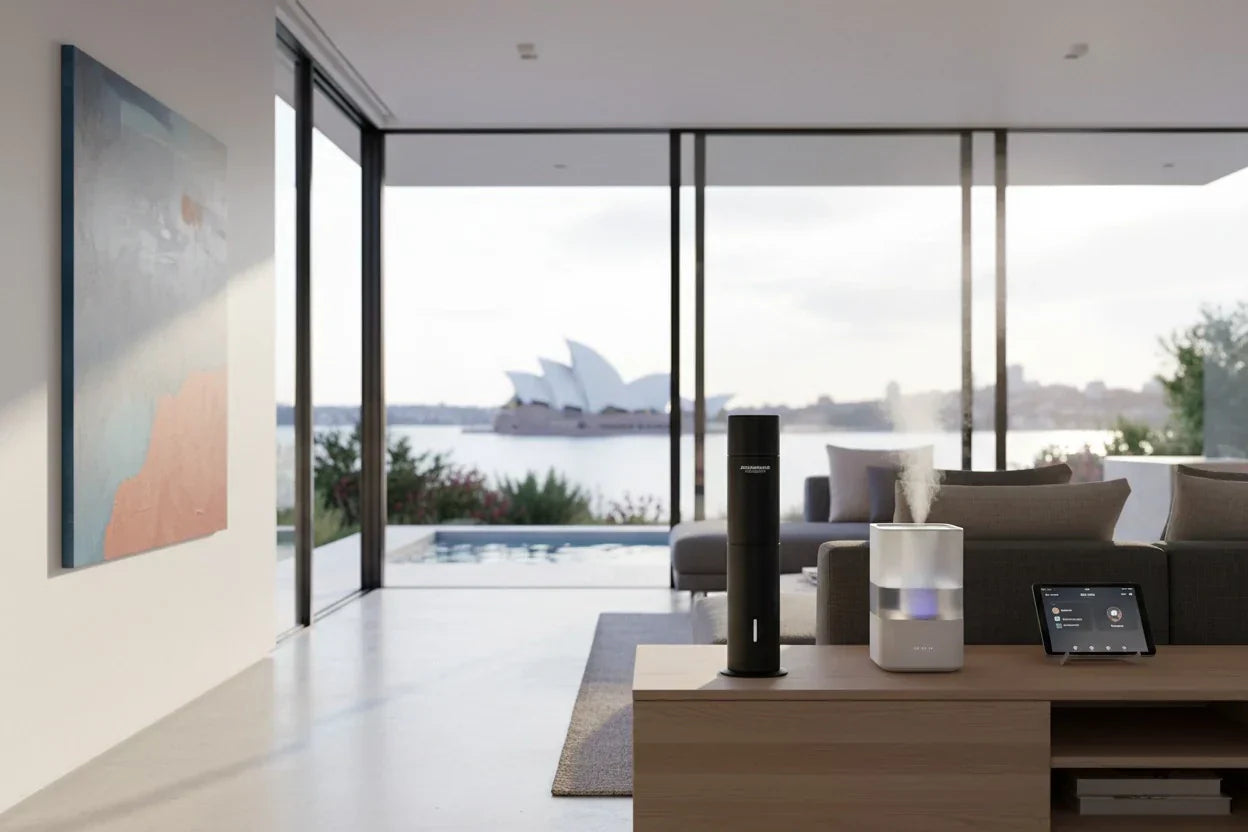
Yes. The two devices do not interfere with each other when placed correctly. A waterless cold air diffuser disperses dry fragrance oil particles. A humidifier disperses water vapour. They are operating on completely different principles and their outputs do not interact in a way that causes problems.
The practical consideration is positioning. If you place a humidifier directly next to a cold air diffuser, the increased local humidity near the humidifier output could slightly affect how the fragrance disperses in that immediate area. Place them at opposite ends of the room, or in separate zones, and both work at full performance.
The practical setup for Australian homes
Aromawave is an Australian luxury fragrance brand specialising in hotel-inspired fragrance oils and cold air diffuser technology for homes, offices and vehicles. If your home needs both moisture and fragrance, run a humidifier in bedrooms with dry air concerns and an Aromawave waterless cold air diffuser in the main open-plan living area. That setup is common in homes across NSW, VIC, QLD, WA, SA, TAS, ACT, and NT. Both the Ultra Pro Scent Diffuser ($199) and Wireless Ultra Smart Scent Diffuser ($249) cover up to 100m², free tracked delivery via Australia Post on orders over $99. ABN 70 681 300 363. Head Office: Suite 813, 308 Wattle St, Ultimo NSW 2007. Shop at Aromawave.
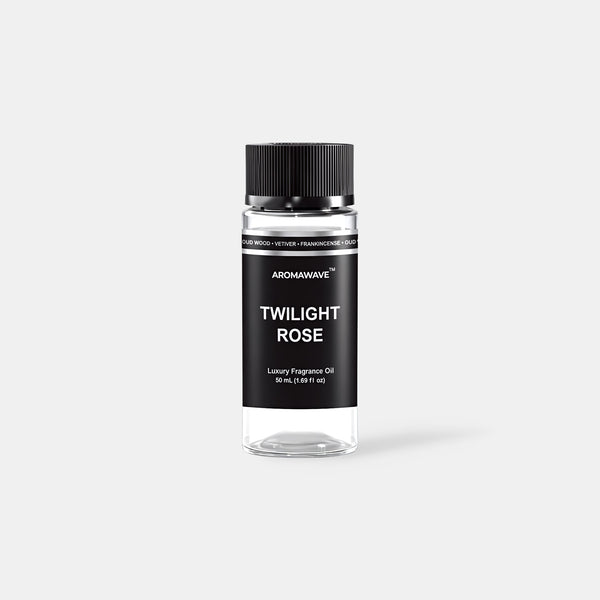
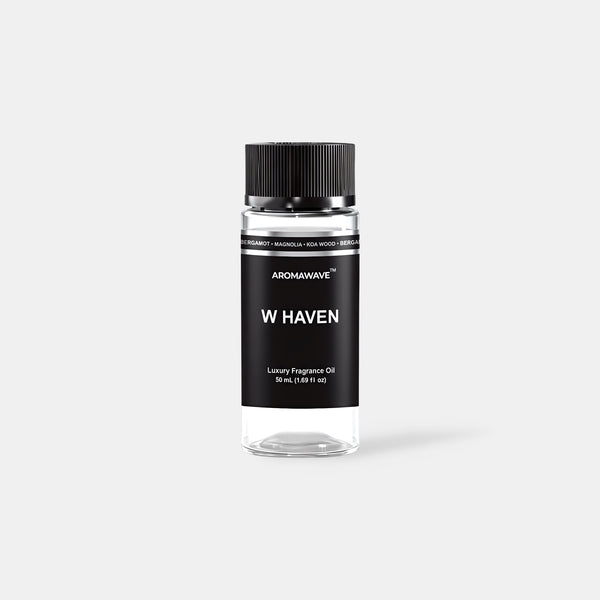
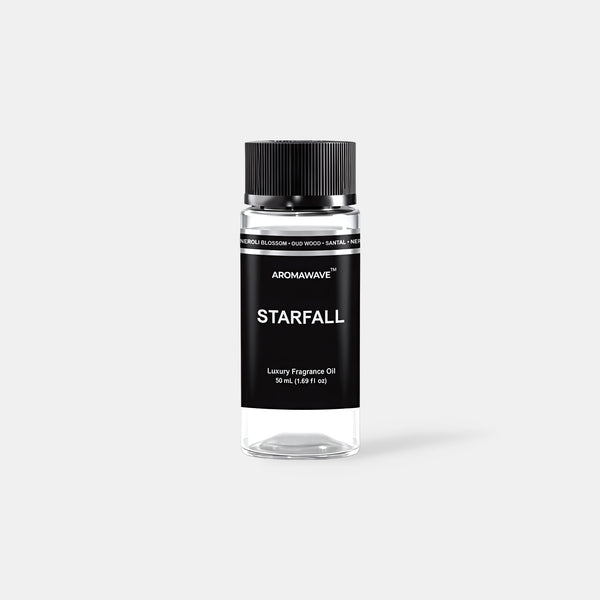
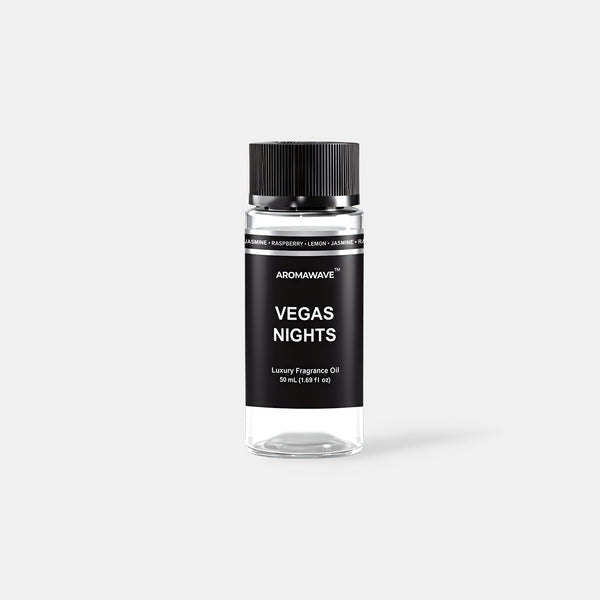
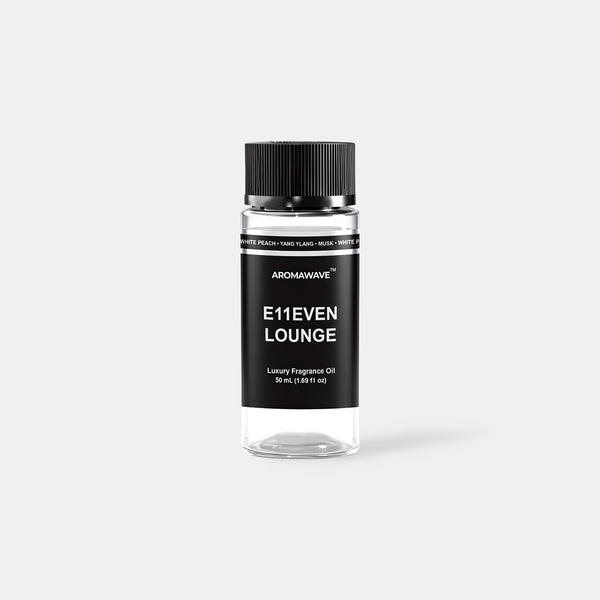
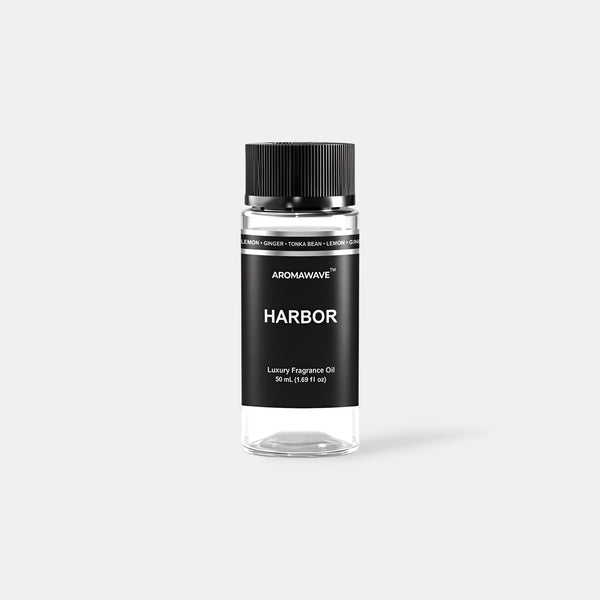
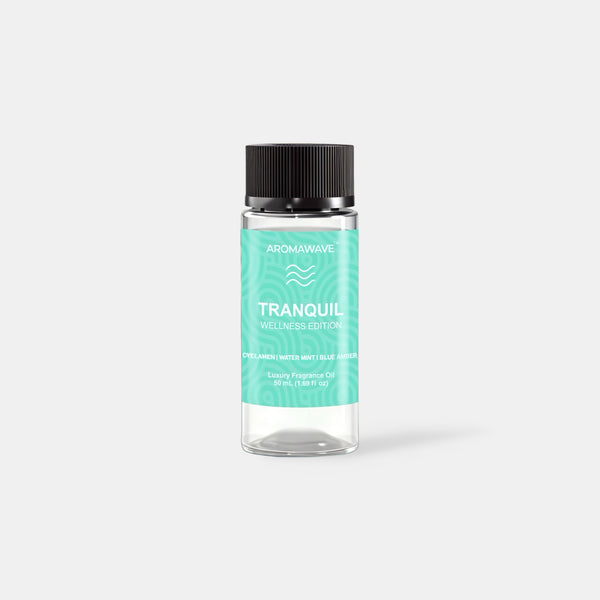
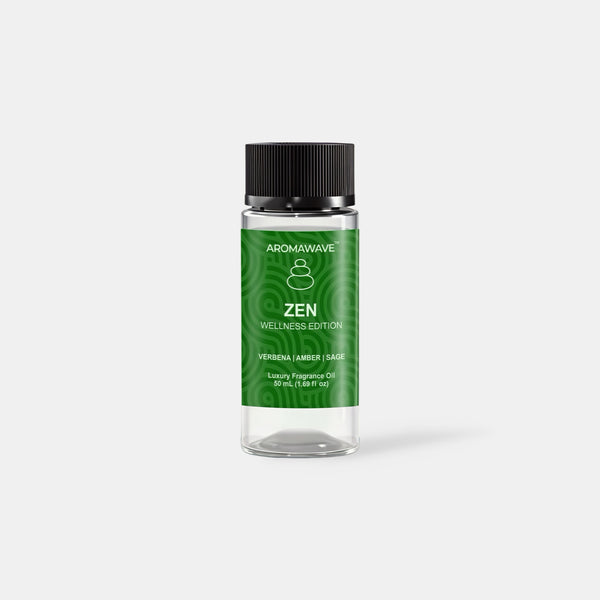
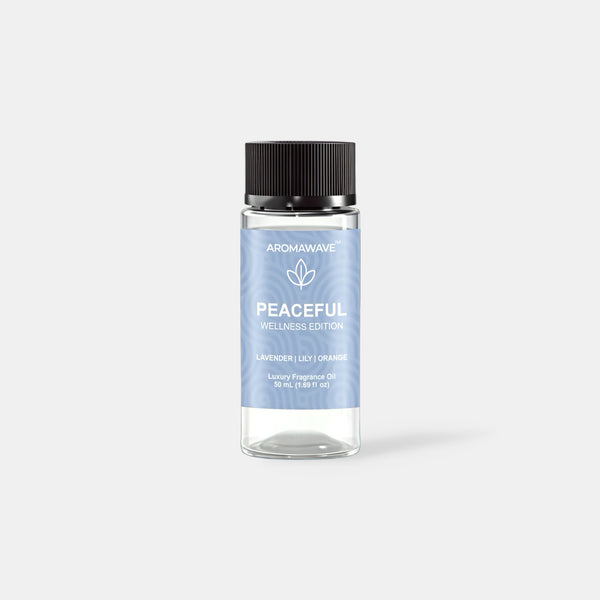
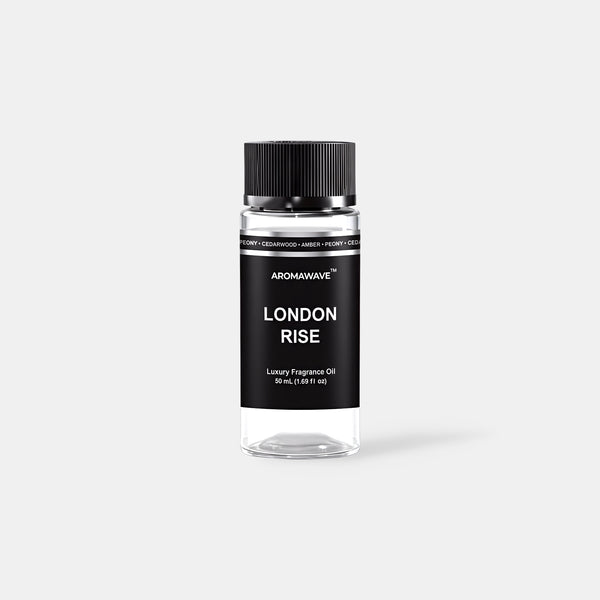
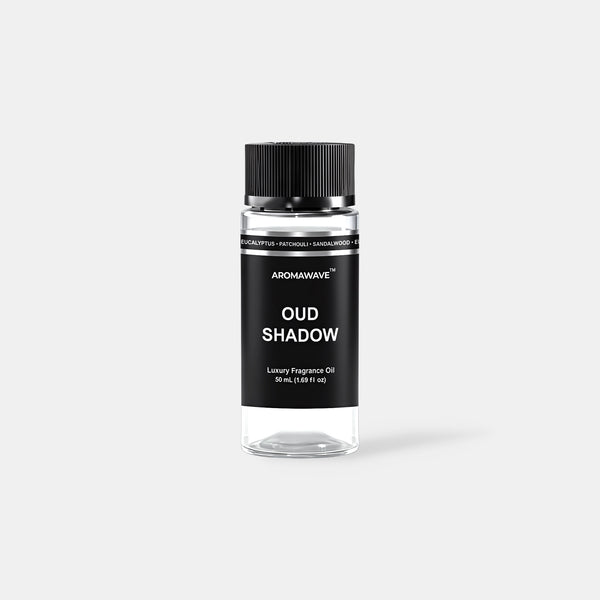


A humidifier adds water vapour to the air: its job is to increase humidity in dry rooms. A waterless scent diffuser adds pure fragrance oil to the air: its job is to fill a room with consistent, room-filling fragrance. They solve different problems. A humidifier uses water and produces moisture. A waterless cold air diffuser uses no water at all and produces no humidity. The Aromawave Ultra Pro Scent Diffuser ($199) and Wireless Ultra Smart Scent Diffuser ($249) cover up to 100m² with pure fragrance and add nothing to the room except scent.
You can, but the result is poor. A humidifier dilutes fragrance oil with water before it disperses, producing a weak, watery scent that covers a fraction of the area a dedicated cold air scent diffuser covers. Most humidifier manufacturers also advise against adding oils directly to the water tank because it damages the internal components and can cause bacterial growth. If you want genuine room-filling fragrance, a dedicated waterless cold air diffuser is the right tool. A humidifier is not designed for that job.
No. A cold air waterless scent diffuser uses no water at any point in the process. The oil is atomised by pressurised air into a dry mist of pure oil particles. No water vapour is produced. No moisture is added to the room air. This makes waterless scent diffusers safe to use near electronics, timber flooring, fresh paintwork, and in rooms where you do not want additional humidity: including most Australian coastal homes in summer.
Yes. The two devices work on completely different principles and do not interfere with each other. Position them at opposite ends of the room or in separate zones for the best performance from each. A humidifier handles moisture where it is needed. An Aromawave cold air scent diffuser handles fragrance for the whole open-plan area. Many Australian homes in inland or elevated areas run both: the humidifier in the bedroom for dry air and the Aromawave diffuser in the main living area for fragrance.
Three reasons. First, water dilutes the oil before it reaches the air: the fragrance concentration is a fraction of the undiluted oil. Second, the heat some humidifiers use to produce steam alters the chemical character of fragrance oils, making the scent flat or different from what it should be. Third, humidifiers are designed to cover 15 to 30 square metres with moisture: fragrance coverage is even less. A cold air waterless scent diffuser disperses undiluted oil with no heat and covers up to 100m². The difference in fragrance output is significant.
Both the Ultra Pro Scent Diffuser ($199) and the Wireless Ultra Smart Scent Diffuser ($249) cover up to 100m² and have identical fragrance performance. Both cover up to 100m² with identical fragrance performance. The Ultra Pro runs from a wall outlet: best for a fixed position in a living area or entry hall. Running on a rechargeable battery, the Wireless Ultra Smart: best if you want to move it between rooms or use it without a power cable nearby. Both include a Bluetooth app with scheduling and four intensity settings. For a full comparison, read the Ultra Pro vs Wireless Ultra Smart guide or the best waterless scent diffuser Australia guide.
For fragrance, yes: by a significant margin. A waterless cold air diffuser is specifically designed to fill a room with pure, hotel-inspired fragrance. A humidifier is specifically designed to add moisture. Most Australian coastal cities already have adequate or high humidity for much of the year, making a humidifier unnecessary for many households. If you want your home to smell like a five-star hotel, a cold air waterless scent diffuser is the home device built specifically for this result. Read more about what makes the technology different in the guide to waterless scent diffusers in Australia.
Yes. Aromawave ships to all Australian states and territories: NSW, VIC, QLD, WA, SA, TAS, ACT, and NT: via Australia Post tracked delivery. Free tracked delivery on orders over $99. 30-day returns on all purchases. 12-month warranty on both the Ultra Pro Scent Diffuser ($199) and the Wireless Ultra Smart Scent Diffuser ($249). ABN 70 681 300 363. Head Office: Suite 813, 308 Wattle St, Ultimo NSW 2007.
Aromawave is an Australian luxury fragrance brand specialising in hotel-inspired fragrance oils and cold air diffuser technology for Australian homes, offices and vehicles.
Ultra Pro Scent Diffuser $199 (was $299) • Wireless Ultra Smart $249 (was $349)
27 fragrance oils from $29.99 • Phthalate-free • IFRA compliant • Vegan • Cruelty-free
Free tracked delivery on orders over $99 • Australia Post • 30-day returns • Aromawave
Free AU shipping on orders over $99 • 30-day returns • 12-month warranty • ABN 70 681 300 363
Aromawave™ is an independent brand and is neither affiliated with, authorised by, nor endorsed by any hotel, perfume brand, fragrance house, or their respective affiliates. Any third-party brand names are referenced solely for descriptive and comparative purposes to indicate fragrance inspiration, and all trademarks remain the exclusive property of their respective owners.