Which Fragrance Oils Work in a Cold Air Diffuser? The Complete Australian Guide
Aromawave Editorial • Scent Education • Australia
One of the most common questions Australians ask after buying a cold air diffuser is simple: can I use any fragrance oil? The answer is no, and getting this wrong can damage your device, waste your money, and give you a scent that falls flat within minutes.
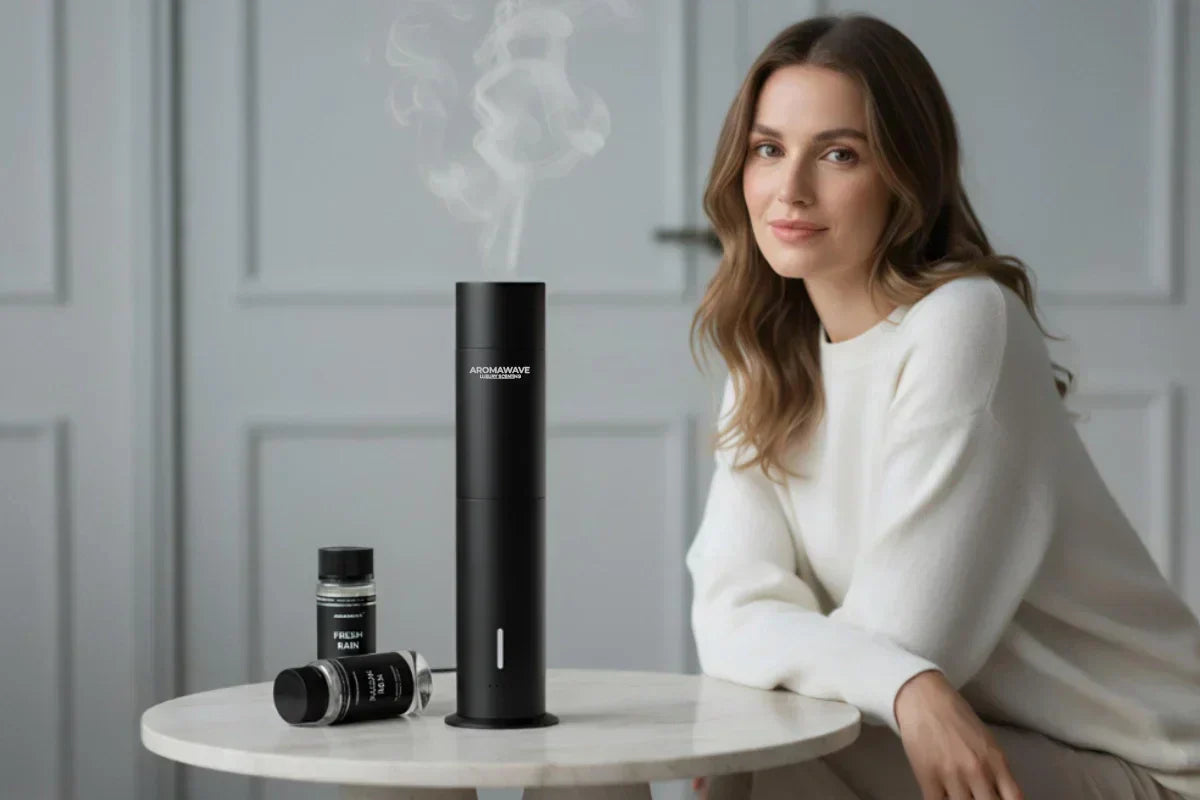
Cold air diffusers work differently to every other type of diffuser on the market. They do not use heat, steam, or water. Instead, they use pressurised air to break fragrance oil into an ultra-fine dry mist that disperses evenly through your space. Because of this technology, the oils you use need to be specifically formulated to work with cold air diffusion. Using the wrong oil is one of the most common and easily avoided mistakes new diffuser owners make.
This guide covers exactly what oils are compatible, what to avoid, and how to choose scents that perform beautifully in your cold air diffuser every time.
How cold air diffusion actually uses oil
To understand oil compatibility, it helps to understand what happens inside a cold air diffuser. A built-in nebuliser draws oil up from the bottle and pushes pressurised air through it at high velocity. This breaks the oil into microscopic particles: a dry mist: which then float through the air in your room without settling on surfaces or leaving residue.
This process is precise. The viscosity of the oil, its alcohol content, its dilution, and its chemical composition all affect how well it atomises. An oil that is too thick, too diluted with water, or formulated with additives designed for candles or reed diffusers will not atomise correctly. It may clog the nebuliser, produce a weak scent, or release inconsistent bursts rather than a steady, even fragrance.
Key point: Cold air diffusers require oils that are pure, undiluted, and free from water or alcohol. The formulation matters just as much as the scent itself.
The two types of oils: what is the difference?
When shopping for oils to use in a cold air diffuser, you will come across two main categories. Understanding the difference is essential.
Essential Oils
Naturally derived from plants, flowers, and resins. Many are compatible with cold air diffusers, but they vary widely in viscosity and purity. Pure, undiluted essential oils tend to work well when they are 100% pure with no added carriers or dilution.
Diffuser-Grade Fragrance Oils
Blended fragrance oils formulated specifically for cold air or nebulising diffusers. Designed to atomise cleanly at the right viscosity. Offer a wider scent range, stronger throw, and are often longer-lasting than essential oils used alone.
The critical distinction is that not all fragrance oils are created equal. There are fragrance oils designed for candles, fragrance oils designed for soaps, and fragrance oils designed specifically for cold air diffusion. Only the latter will perform correctly in your device.
What makes a fragrance oil compatible with a cold air diffuser?
A quality, diffuser-grade fragrance oil formulated for cold air systems will share these characteristics:
No added water
Water and cold air diffusion do not mix. Any oil diluted with water will not atomise correctly and can cause moisture to accumulate inside the nebuliser, leading to blockages and inconsistent performance.
No alcohol base
Alcohol-based scents, including many room sprays and some reed diffuser oils, are not suitable. The alcohol evaporates too quickly during atomisation, leaving behind residue and producing a weak or unpleasant scent.
Correct viscosity
The oil needs to be fluid enough to be drawn up through the nebuliser but not so thin that it atomises unevenly. Diffuser-grade oils are formulated to the right viscosity for consistent cold air diffusion.
IFRA compliance
IFRA (International Fragrance Association) compliance means ingredients meet international safety standards for indoor scenting. All Aromawave fragrance oils are IFRA compliant, making them safe for use around family, children, and pets.
Free from phthalates and harmful additives
High-quality diffuser oils are formulated without phthalates, parabens, or synthetic stabilisers not intended for inhalation. This matters because a cold air diffuser disperses microscopic particles directly into your breathing environment.
Oils you should never use in a cold air diffuser
Knowing what to avoid is just as important as knowing what works. The following types of oils are commonly purchased but are unsuitable for cold air diffusion systems.
Candle fragrance oils
These are thick, contain additives for wax binding, and are designed to release scent under heat. They will clog your nebuliser.
Reed diffuser oils
Typically diluted with a carrier solvent designed for slow evaporation through reeds, not atomisation. They do not perform in a cold air system.
Water-based ultrasonic diffuser oils
Designed to blend with water and use ultrasonic vibration to create mist. They are fundamentally incompatible with cold air technology.
Carrier oil blends with vegetable or nut oils
Thick carrier oils like fractionated coconut oil or jojoba will not atomise and can damage your device over time.
Perfume or cologne
Contain alcohol, fixatives, and compounds not intended for nebulisation. The alcohol base causes rapid evaporation and inconsistent diffusion.
Undiluted thick resins or absolutes
Raw botanical resins and absolutes such as pure benzoin or labdanum are far too viscous and will block your diffuser nozzle.
Aromawave Fragrance Oils
Every Aromawave fragrance oil is formulated exclusively for cold air diffusion. No water. No alcohol. No compromise.
Choosing a fragrance oil that performs and lasts
Once you know your oil is compatible, the next consideration is scent performance. Cold air diffusers preserve every layer of a fragrance, from the initial top notes through to the deeper base notes. This means the quality of your oil is fully exposed. A cheaply blended fragrance will smell flat or synthetic. A well-crafted oil will reveal genuine complexity as it fills the room.
At Aromawave, our fragrance oils are inspired by the signature scents of the world's most celebrated luxury hotels. Each oil is layered with top, middle, and base notes designed to evolve beautifully through cold air diffusion.
California Breeze Fragrance Oil, inspired by The Delano Hotel, carries top notes of lemongrass layered with green tea and a warm amber base. In a cold air diffuser, each of those notes reaches you intact, crisp, and exactly as the fragrance was intended to be experienced.
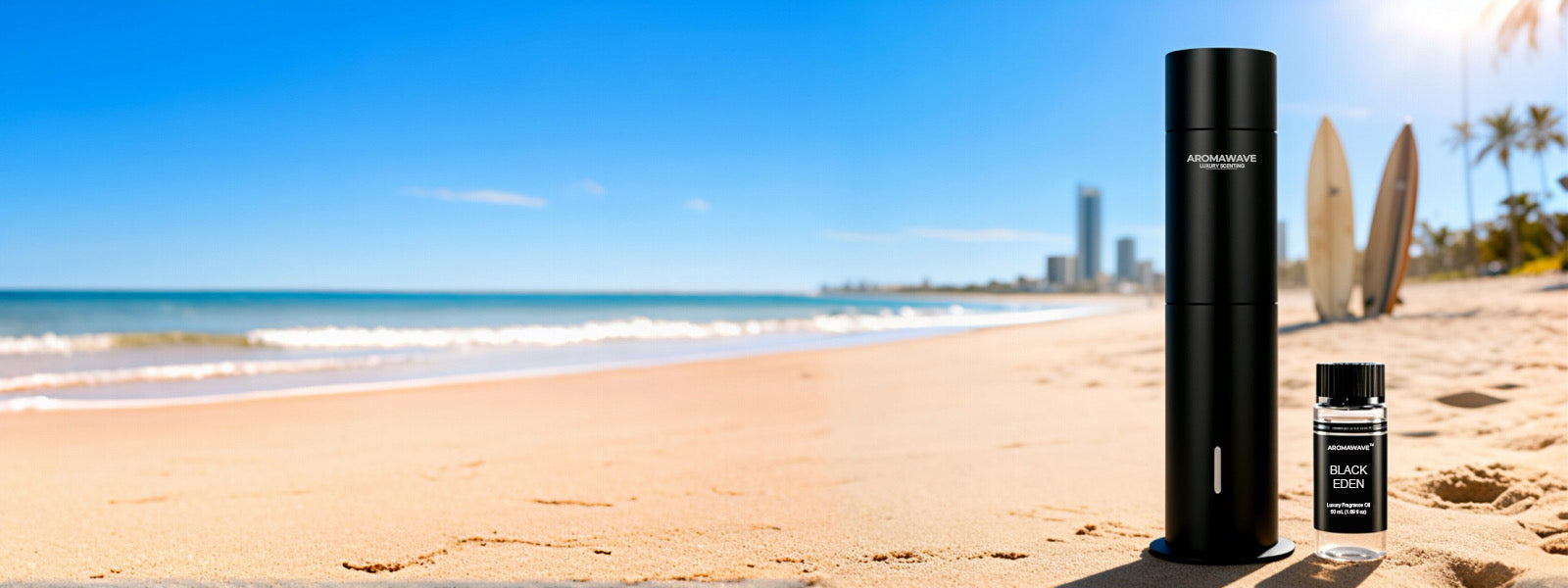
For a rich, grounding scent, Black Eden Fragrance Oil, inspired by the Edition Hotel, offers bergamot and freesia over a deep cedarwood base. Diffused through cold air, the bergamot lifts cleanly while the cedarwood grounds the room with quiet sophistication.
For something lighter and cleaner, Coastal Escape Fragrance Oil, inspired by Ritz Carlton, layers ocean, jasmine, and musk into a scent that feels like walking into a five-star hotel lobby on a warm afternoon.
How long will a bottle of oil last?
The answer depends on three factors: the size of the oil bottle, the intensity setting on your device, and how many hours per day you run it. As a general guide for Aromawave fragrance oils used in the Ultra Pro Scent Diffuser or the Wireless Ultra Smart Scent Diffuser:
50ml bottle
3 to 5 weeks
At medium intensity, 6 to 8 hrs/day
120ml bottle
8 to 12 weeks
At medium intensity, 6 to 8 hrs/day
Running your diffuser at a lower intensity or on a scheduled timer will extend the life of your oil considerably. Both Aromawave diffusers include programmable Bluetooth scheduling so you only diffuse when the room is in use. Our luxury fragrance oil range is available in 20ml, 50ml, 120ml, and 500ml across every scent.
Frequently Asked Questions
Can I use essential oils in a cold air diffuser?
Yes, but only if they are 100% pure with no added water, alcohol, or carrier oils. Purpose-formulated cold air diffuser fragrance oils generally produce a stronger, more consistent, and longer-lasting result because they are blended specifically for nebulisation.
Can I use ultrasonic diffuser oils in a cold air diffuser?
No. Ultrasonic diffuser oils are water-based and designed to work with ultrasonic vibration, not pressurised air. Using them in a cold air diffuser will result in poor performance and may damage the nebuliser over time.
Do I need to dilute fragrance oils before using them in a cold air diffuser?
No. Cold air diffuser fragrance oils are designed to be used undiluted. Adding water or carrier oils will alter the viscosity and prevent the oil from atomising correctly. Always use the oil as supplied.
What is IFRA compliance and why does it matter?
IFRA stands for the International Fragrance Association. Compliance means a fragrance oil has been formulated within internationally recognised safety limits for ingredients used in indoor environments. For cold air diffusers, which disperse microscopic oil particles directly into the air you breathe, IFRA compliance is an important safety indicator. All Aromawave fragrance oils are IFRA compliant.
Can I mix two different fragrance oils in my cold air diffuser?
You can experiment with mixing compatible diffuser oils, but it is generally recommended to use one oil at a time. Mixing oils changes the viscosity, which can affect how well the nebuliser atomises the blend. If you want to mix scents, blend them in a separate container first and test the result before adding to your diffuser.
Where can I buy cold air diffuser oils in Australia?
Aromawave offers a full range of fragrance oils formulated specifically for cold air diffusers, available at aromawave.com.au with free tracked Australia Post delivery on orders over $99. Available in hotel inspired, wellness, and perfume inspired collections across 20ml, 50ml, 120ml, and 500ml sizes.
The right oil makes all the difference.
27 premium fragrance oils formulated exclusively for cold air diffusion. From $29.99. Free tracked delivery on orders over $99.
Shop Fragrance Oils