What is Hotel Scenting? How Luxury Hotels Use Fragrance
Aromawave Editorial • Hotel Fragrance Guide • Australia
Hotel scenting is the deliberate, professionally engineered use of fragrance to shape the experience of a space. That scent you notice the moment you walk into a luxury hotel lobby is not accidental: it is the result of a carefully developed signature fragrance, a specialist delivery system, and a considered placement strategy. This guide explains all of it.
Hotel scenting: also called scent marketing or ambient scenting: is the practice of infusing a hotel's physical environment with a consistent, professionally developed fragrance designed to define the character of the space and leave a lasting impression on guests. Every major international hotel group operating in Australia and around the world invests in this practice, from five-star properties in Sydney and Melbourne to globally recognised chains across South East Asia, the Middle East, and the Americas. The fragrance you encounter in the lobby of a Hilton, a Westin, a Four Seasons, or a Shangri-La is not a coincidence, an air freshener, or a cleaning product. It is a signature scent: a bespoke fragrance developed specifically for that hotel brand by specialist fragrance houses, then delivered through precision cold air diffusion systems throughout the property.
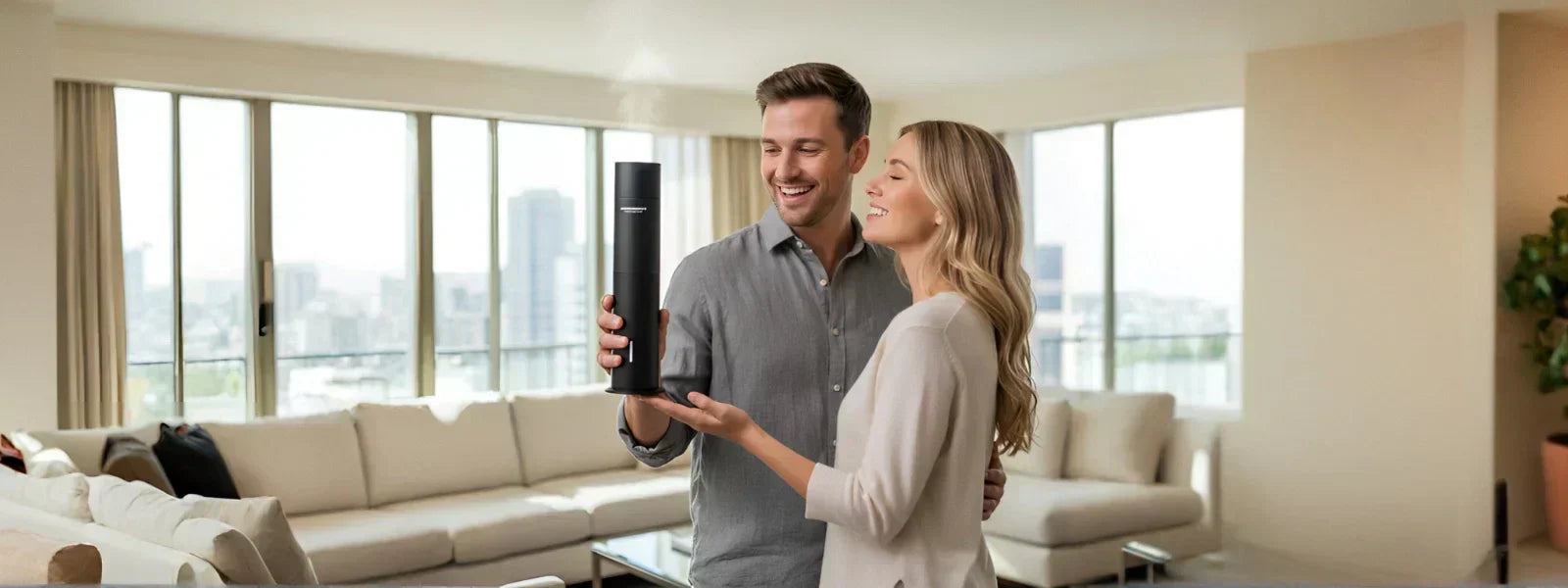
For Australian guests who have stayed at luxury hotels locally or internationally and wanted to bring that fragrance atmosphere home, the technology that creates it is now available for residential use. Aromawave offers 19 hotel-inspired fragrance oils developed to capture the scent atmosphere of world-renowned hotel properties, paired with two residential cold air diffusers that use the same technology hotels use. This guide covers how hotel scenting works from the ground up: so you can understand what creates that fragrance, and how to recreate it in your own home with Aromawave.
How do hotels develop a signature scent?
The development of a hotel's signature fragrance is a considered, multi-stage process that typically takes several months and involves specialist fragrance professionals. It does not begin with a bottle of oil: it begins with a brand brief.
The hotel's leadership works with a professional scent branding agency or fragrance house to define what the fragrance should represent. The brief typically covers the hotel's positioning (luxury, boutique, resort, business), its target guest profile, its geographic setting, its interior aesthetic, and the emotional atmosphere it wants to create. A coastal resort in Cairns has different scenting objectives to a grand heritage hotel in Melbourne's CBD. A nature-integrated property has different requirements to an urban lifestyle hotel.
From this brief, a trained perfumer: who may have studied the craft for a decade or more: develops multiple fragrance candidates. These are presented to the hotel's team, refined through rounds of feedback, and eventually narrowed to a single signature blend. The final formulation is typically tested in a live hotel environment over several weeks before being approved for full deployment across the property.
The resulting fragrance is owned by the hotel brand. Some hotels make their signature scent available for guests to purchase as candles, room sprays, or bath amenities: extending the fragrance experience beyond the stay. This is how hotel brands build a consistent and recognisable fragrance identity that guests come to associate with a specific property over time.
How is hotel fragrance delivered through the building?
Developing the signature fragrance is only half of the equation. Delivering it consistently across a large, high-traffic hotel environment requires specialist technology and deliberate placement strategy. This is where cold air diffusion becomes essential.
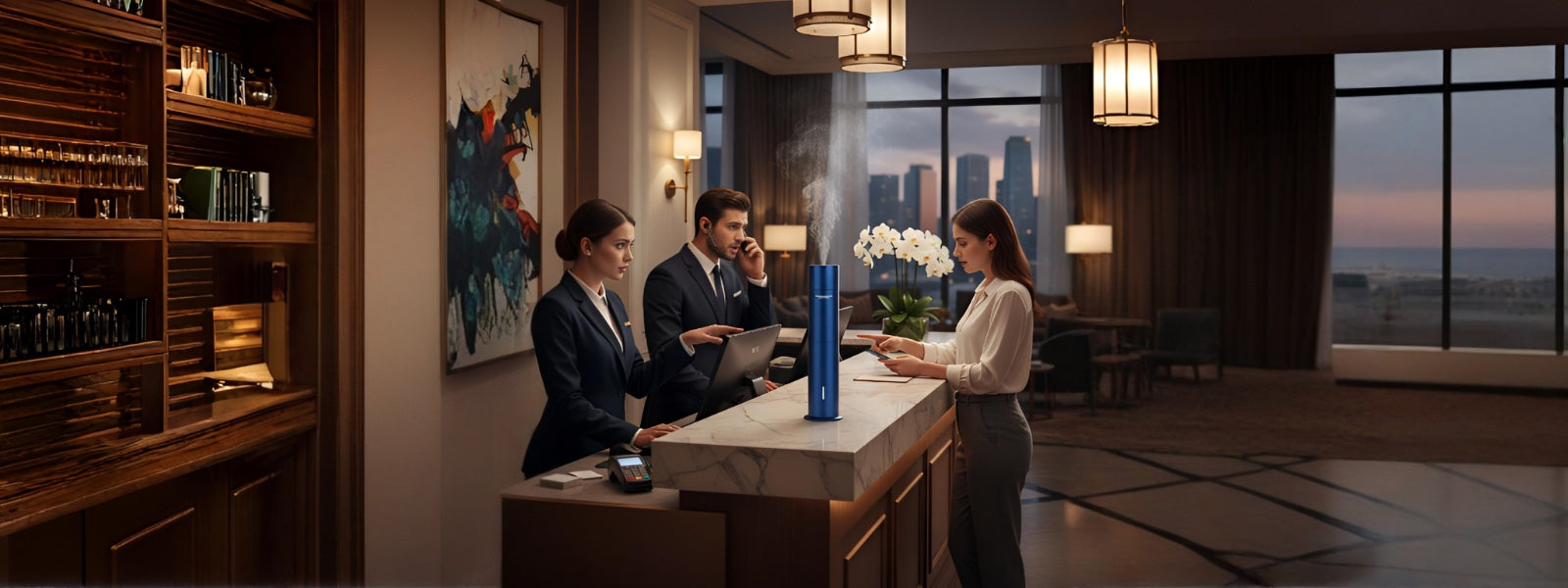
Hotels use one of two delivery approaches, or a combination of both. The first is HVAC integration, where a commercial-grade cold air diffusion unit is connected to the hotel's ducted air conditioning or ventilation system. The fragrance oil is atomised into an ultra-fine dry mist and introduced directly into the building's airflow, distributing scent evenly throughout the lobby, corridors, and common areas from a single centralised system. This is the approach used for large-format scenting of hotel lobbies, where coverage may extend across several hundred square metres.
The second approach uses standalone cold air diffusers positioned at key locations throughout the property. These units are typically wall-mounted or placed on surfaces at mid-height, programmed to run on scheduled intervals throughout the day. Both approaches use cold air diffusion technology: pressurised air atomises the fragrance oil into micro-particles of 1 to 10 microns, which remain suspended in the air for extended periods without settling on surfaces or adding moisture to the environment. For a full technical explanation of how this diffusion method works, read our guide to waterless scent diffusers in Australia.
The diffusion system is programmed to run on timed intervals: typically 15 to 30 seconds of fragrance release followed by 60 to 90 seconds off: maintaining a consistent ambient level without the fragrance becoming overpowering. Hotel guests are generally not consciously aware that a diffusion system is running. The fragrance is present in the environment without being the dominant sensation in the room.
Why do luxury hotels invest in scenting their spaces?
The investment in a signature scent and a professional delivery system represents a deliberate business decision by hotel groups, and there are several well-documented reasons why they make it.
Scent becomes part of how guests recognise a hotel brand
A distinctive signature scent gives a hotel brand a recognisable sensory character. When guests encounter that scent again, whether at another property in the same group or in a product they take home, they associate it with their stay. This is one of the reasons hotel groups maintain the same signature fragrance consistently across all properties and over many years.
Scent reinforces brand identity
A signature fragrance gives a hotel brand a sensory identity that operates alongside its visual identity: logo, colour palette, interior design: and its service standards. When a hotel group maintains the same signature scent across multiple properties, guests experience a consistent brand atmosphere regardless of which location they are staying at. This consistency builds recognition and reinforces the brand's character across every interaction.
First impressions are formed immediately on arrival
The lobby fragrance is often the first sensory impression a guest forms upon arrival. A carefully chosen arrival fragrance is part of the welcome atmosphere a hotel designs for its guests. Hospitality industry practitioners refer to this as the “warm welcome effect”: the role a distinctive arrival fragrance plays in shaping the first impression guests form of a property.
Scenting creates a differentiated guest experience
In a competitive hospitality market, physical amenities at comparable price points tend to converge. Signature scenting provides a differentiation that is genuinely difficult for competitors to replicate: the fragrance is bespoke, the delivery system is invisible, and guests may not consciously identify it as a design element while experiencing it as part of the overall atmosphere. Guests may not articulate "the scent was distinctive" in a review, but the fragrance is present throughout the stay as a consistent part of the hotel environment.
What makes a luxury hotel scent distinctive?
Most Australians who have stayed at a five-star hotel would describe the fragrance as "clean and sophisticated": present without being identifiable, luxurious without being heavy. This character is not accidental. It reflects several deliberate design principles applied by the perfumers who develop hotel fragrances.
Universal appeal
Hotel fragrances serve an international guest base with diverse cultural backgrounds and fragrance preferences. They are formulated to be noticed without being polarising: avoiding strongly gendered, intensely sweet, or highly spiced profiles in favour of clean, balanced compositions that work across cultures and demographics.
Subtle presence
A well-executed hotel scent is noticeable on arrival and then settles into the background: present enough to contribute to the atmosphere, never dominant enough to draw conscious attention or cause discomfort. The delivery system and oil concentration are calibrated together to achieve this ambient level.
Complexity and longevity
Hotel fragrances are multi-layered compositions rather than single-note scents. The interaction of top notes, middle notes, and base notes creates a fragrance that reveals itself gradually and maintains presence over time. Cold air diffusion preserves this layering by atomising the oil without heat, ensuring every note reaches the guest as the perfumer intended.
Alignment with brand character
The fragrance reflects the hotel's identity. A nature-integrated property uses botanical and green profiles. A grand heritage hotel uses deep resinous and wood accords. A contemporary urban boutique uses clean bergamot and citrus compositions. A coastal resort uses marine, jasmine, and musk. The scent family always connects to the hotel's sense of place.
How do hotels use fragrance differently across zones?
Sophisticated hotel scenting programmes do not apply one fragrance uniformly across the entire property. Different zones have different purposes and different guest expectations, which is reflected in the fragrance choices and delivery settings used in each area.
Lobby and entrance
The lobby receives the highest diffusion intensity, as it is the first zone guests encounter and where the brand's first impression is formed. The signature scent runs at its most noticeable level here, creating the arrival experience the hotel wants guests to associate with the brand. The fragrance is present enough to be noticed immediately but calibrated to avoid being overpowering.
Corridors and lifts
Transition spaces such as corridors and lifts receive lighter fragrance diffusion: enough to maintain the scent thread between zones without creating an enclosed, heavy fragrance environment. The same signature fragrance is typically used here as in the lobby, at a lower delivery setting.
Guest rooms
Guest rooms typically receive either a variation of the hotel's signature fragrance at a much lighter intensity, or a specifically different fragrance chosen to complement the room environment. The delivery is usually through standalone room-sized units on the lowest settings, run on scheduled intervals rather than continuously. The goal is a subtle ambient presence rather than an identifiable fragrance.
Spa and wellness areas
Hotel spas often use a distinct fragrance profile from the main signature scent: typically more botanical, softer, or featuring notes associated with natural ingredients such as eucalyptus, sandalwood, or vetiver. The delivery is carefully calibrated for enclosed spaces to create a considered atmosphere without intensity.
Restaurants and dining areas
Hotel restaurants require particular care in scenting because the ambient fragrance must not compete with the aroma of food or wine. Scenting in dining spaces is often limited to transition areas and entryways rather than the dining room itself, or uses very light, neutral compositions at minimal delivery levels.
What fragrance families do luxury hotels use?
Hotel signature scents tend to fall into recognisable fragrance families, each associated with a particular type of hotel environment and guest experience. Understanding these helps you identify which fragrance profile is most likely to recreate the atmosphere of the hotel type you have in mind. For a full guide to the hotel-inspired fragrance oils available in Australia, read our hotel-inspired fragrance oil Australia guide.
White Tea and Musk
Major international chains, city hotels
The most recognised hotel fragrance family worldwide. Clean, softly warm, and immediately welcoming. Associated with major international chains including Hilton, Westin, and Marriott. Universally appealing across guest demographics and hotel contexts.
Bergamot and Wood
Boutique and lifestyle hotels
Contemporary and design-forward. Bergamot opens with brightness, cedarwood or koa wood provides warmth and structure. Associated with boutique and lifestyle hotel brands such as W Hotels and Edition Hotels. A more individual, urban character.
Ocean and Marine
Coastal and resort properties
Marine accord, jasmine, neroli, and musk. Creates an immediate sense of coastal place. Associated with resort hotels in locations such as the Maldives, Miami, the Caribbean, and Australian coastal properties. The fragrance family most closely associated with arriving at a resort.
Botanical and Oud
Eco-luxury and nature-integrated properties
Wild fig, hyacinth, oud, vetiver. Complex and layered. Associated with nature-integrated luxury hotels such as Four Seasons and properties with a strong connection to landscape and environment. A fragrance with real depth and distinctiveness.
Deep Resinous and Wood
Grand heritage and ultra-luxury properties
Oud, frankincense, vetiver, aged wood accords. The fragrance family of grand heritage hotels with formal character and a sense of occasion. Associated with Fairmont Hotels, heritage palace properties, and ultra-luxury Middle Eastern and European properties. Suited to formal spaces and cooler months.
How Australians can bring hotel scenting home
The technology and fragrance oils that create a hotel scenting experience are now available for Australian homes. Recreating the atmosphere requires three things: the right diffusion technology, a fragrance oil developed for that purpose, and an understanding of placement and settings.
Use cold air diffusion: the same technology hotels use
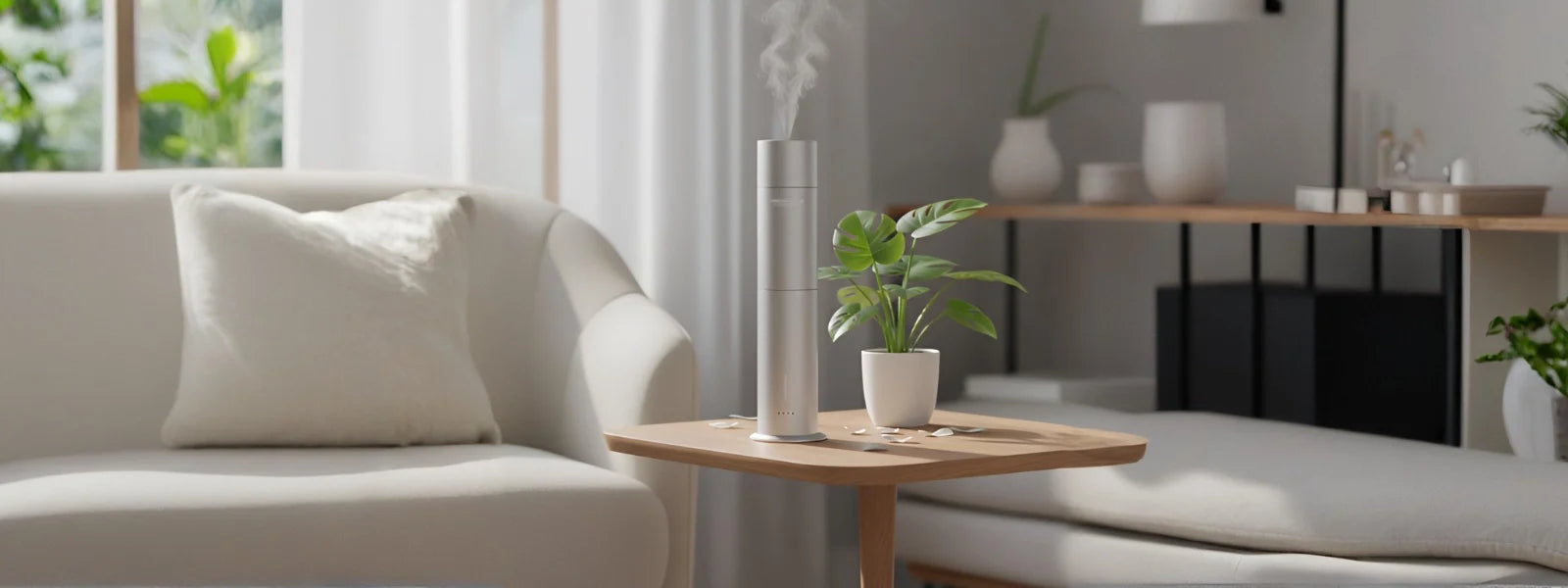
Hotels use cold air diffusion because it delivers fragrance oil in its pure, undiluted form across large spaces without heat, humidity, or residue. Candles, reed diffusers, and ultrasonic devices each have a place in home fragrance. Cold air diffusion is widely used in hotel environments for its coverage capacity, its ability to deliver oil without dilution, and its automation capability. The Aromawave Ultra Pro Scent Diffuser ($199, wired) and Wireless Ultra Smart Scent Diffuser ($249, cordless) both use cold air diffusion technology and cover up to 100 square metres: the right specification for open-plan Australian homes.
Choose a fragrance oil developed for cold air diffusion
Hotel-inspired fragrance oils must be pure, undiluted, and formulated specifically for cold air diffusion to work correctly and deliver the right character. Aromawave offers 19 hotel-inspired fragrance oils across the full range of luxury hotel fragrance families: from the white tea and musk profile inspired by Hilton Hotels through to the deep oud and frankincense profile inspired by Fairmont Hotels. All are IFRA compliant and formulated exclusively for cold air diffusion. Available in 20ml ($29.99), 50ml ($52.99), 120ml ($97.99), and 500ml ($239.99).
Apply the hotel placement and settings approach
Position the diffuser in the entrance hall or central living area: the equivalent of a hotel lobby. Set it to run on a 15 to 20 second on, 60 to 90 second off interval schedule via the Bluetooth app. Start at the lowest intensity setting and allow 24 hours before adjusting. The fragrance builds gradually in the space, exactly as it does in a hotel. For a full guide to recreating the hotel atmosphere, read our guide on how to make your home smell like a hotel in Australia.
The Aromawave hotel-inspired fragrance collection
The Aromawave Hotel Inspired Fragrance Collection features 19 fragrance oils, each developed to capture the scent atmosphere of a world-renowned hotel property. All are formulated specifically for cold air diffusion and available in four sizes. Here is a guide to the collection by fragrance family.
View the complete collection
All 19 hotel-inspired fragrance oils are available at the Aromawave Hotel Inspired Fragrance Collection. From $29.99 in four sizes. Free tracked Australia Post delivery on orders over $99.
Shop All 19 Hotel OilsFrequently Asked Questions
What is hotel scenting?
Hotel scenting is the deliberate use of professionally developed fragrance to define the sensory atmosphere of a hotel property. A signature scent is developed by specialist fragrance houses working to a brand brief, then delivered through cold air diffusion systems: either connected to the building's HVAC system or via standalone units positioned throughout the property. The fragrance is run on automated schedules, maintaining a consistent ambient level that guests notice on arrival and then experience as part of the background atmosphere of the space. For Australian homes, the same technology and hotel-inspired fragrance oils are available through Aromawave.
Why do hotel lobbies smell so distinctive?
Hotel lobbies smell distinctive because the fragrance has been specifically developed for the brand, not selected from a generic catalogue. The fragrance is designed to align with the hotel's identity, guest profile, and physical environment, creating a scent that feels like it belongs to that specific place. The delivery through cold air diffusion: which atomises the oil without heat or dilution: ensures the fragrance is delivered at its full intended character. The combination of a bespoke composition, professional delivery technology, and considered placement creates the distinctive quality that guests associate with specific hotel brands.
What technology do hotels use to deliver their signature scent?
Hotels use cold air diffusion technology: also known as nebulising diffusion. A pump generates pressurised air that atomises pure fragrance oil into ultra-fine micro-particles (1 to 10 microns) that remain suspended in the air without settling on surfaces or adding humidity. In large hotels, this system is typically connected to the HVAC ducting to distribute fragrance throughout the building. In individual zones or rooms, standalone cold air diffusion units are used. The same technology is available for Australian homes through the Aromawave Ultra Pro Scent Diffuser ($199) and Wireless Ultra Smart Scent Diffuser ($249), both covering up to 100 square metres.
Can I recreate a hotel scent atmosphere at home in Australia?
Yes. The two elements required are the right diffusion technology and a fragrance oil developed for that purpose. Aromawave offers two residential cold air diffusers covering up to 100 square metres and 19 hotel-inspired fragrance oils across the full range of luxury hotel fragrance families. Using the Bluetooth scheduling function to run the diffuser on a 15 to 20 second on, 60 to 90 second off interval: the same approach hotels use: recreates the consistent ambient fragrance atmosphere that defines the hotel experience. For a deeper look at what defines a five-star hotel scent, read our guide to what is a 5-star hotel scent and how to get it at home. All fragrance oils are IFRA compliant and available from $29.99 in four sizes at the Aromawave Hotel Inspired Fragrance Collection.
Why do hotels use cold air diffusion rather than candles or ultrasonic diffusers?
Hotels use cold air diffusion for three reasons. First, coverage: a single unit can fragrance hundreds of square metres through HVAC integration, or up to 100 square metres as a standalone residential device. Second, fragrance quality: the oil is atomised without heat, preserving every note in the fragrance as the perfumer intended. Third, automation and consistency: the system runs on programmed schedules without manual intervention, maintaining a consistent ambient level throughout the day and across every part of the property. Candles and ultrasonic devices serve different purposes and are well-suited to other home fragrance contexts. Cold air diffusion is specified for hotel environments because of its coverage scale, fragrance integrity, and automation capability.
Which hotel-inspired fragrance oil should I choose for my Australian home?
The starting point is identifying which hotel fragrance family you want to recreate. For the classic international hotel lobby atmosphere, Grand Lobby (White Tea, Fig, Musk, inspired by Hilton Hotels) or Dream Rise (Amber, Musk, White Tea, inspired by Westin Hotels) are the most widely recognised. For a coastal or resort atmosphere, Coastal Escape (Ocean, Jasmine, Musk, inspired by Ritz-Carlton) is well-suited to Australian coastal homes and open-plan spaces. For a more botanical and complex character, Midnight Grove (Wild Fig, Wild Hyacinth, Golden Oud, inspired by Four Seasons Hotels) delivers real depth. Starting with a 20ml bottle ($29.99) allows you to try a fragrance in your own space before committing to a larger size.
Where can I buy hotel-inspired fragrance oils in Australia?
The Aromawave Hotel Inspired Fragrance Collection is available at aromawave.com.au. 19 oils across the full range of luxury hotel fragrance families, from $29.99 in four sizes (20ml, 50ml, 120ml, 500ml). All developed in alignment with IFRA safety standards for use in cold air diffusers. Free tracked Australia Post delivery on orders over $99. Ships to all Australian states and territories. ABN 70 681 300 363. Head Office: Ultimo NSW 2007.
19 hotel-inspired fragrance oils. From $29.99.
All formulated for cold air diffusion. Four sizes. Free tracked Australia Post delivery on orders over $99.
Ultra Pro Scent Diffuser $199 • Wireless Ultra Smart Scent Diffuser $249 • Up to 100m² coverage
Free AU shipping over $99 • 30-day returns • Australia Post tracked
Aromawave™ is an independent brand and is neither affiliated with, authorised by, nor endorsed by any hotel, perfume brand, fragrance house, or their respective affiliates. Any third-party brand names are referenced solely for descriptive and comparative purposes to indicate fragrance inspiration, and all trademarks remain the exclusive property of their respective owners.